
cloud security news
22 stories
The State of Cybersecurity in 2026: Key Segments, Insights, and Innovations
A recent report on the state of cybersecurity in 2026 indicates that the landscape is being profoundly influenced by the continued expansion of cloud computing, artificial intelligence, and distributed systems. This evolution is driving organizations to prioritize continuous visibility and control over a sprawling infrastructure encompassing numerous identities, devices, and data repositories.

Introducing Cloudflare Traces: follow requests through our entire platform
Cloudflare has confirmed that it was targeted by a nation-state attacker in November 2023, with the incident involving a highly sophisticated attempt to gain persistent access to its systems. The company disclosed that the attacker, identified as a nation-state actor, exploited a zero-day vulnerability in Atlassian Confluence Data Center and Server to breach its self-hosted Atlassian server.…
Identity Visibility in 2026: The Foundation of Identity Security
A recent report highlights the critical role of identity visibility as the foundational element for effective identity security by 2026. The analysis underscores that a lack of comprehensive insight into digital identities, their permissions, and their actual usage patterns creates significant vulnerabilities that threat actors frequently exploit. This issue is particularly pronounced given…

In Other News: Microsoft’s Cloud Patches, Hacked Dropbox Accounts, Guardio’s $1.1B Valuation
Recent reports indicate that Microsoft has issued patches for its cloud services, addressing potential vulnerabilities within its extensive infrastructure. This development is part of ongoing efforts by major cloud providers to maintain the security and integrity of their platforms against evolving threats.
Hack One Robot, Reach the Next: Unitree G1 Security Flaws
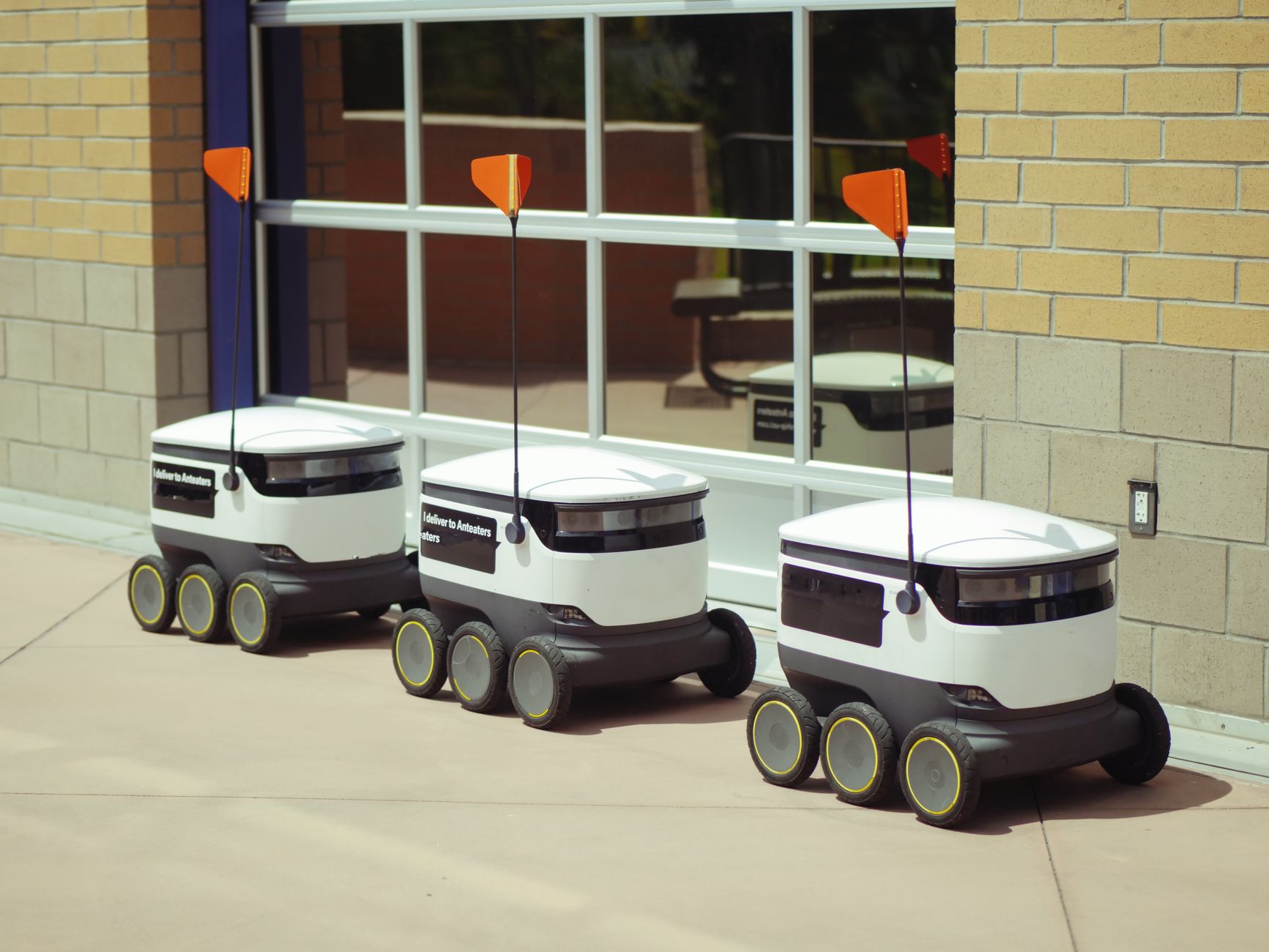
A security researcher has uncovered a series of vulnerabilities in the Unitree G1 humanoid robot that could allow an attacker to gain remote root access and potentially compromise other robots within proximity. The researcher, Olivier Laflamme, spent approximately three months investigating the G1 and detailed two distinct vulnerabilities, identified as CVE-2026-76639 and CVE-2026-76640.

Obfuscating IP Addresses as Hostnames, (Tue, Aug 25th)
A recent report highlights a technique where IP addresses can be obfuscated as hostnames, a method that can be exploited in various security attacks. This approach leverages the way systems resolve or interpret network requests, potentially bypassing security controls designed to detect and block direct IP address references. The core of the issue lies in the ability to represent an IP address…

Cloudflare Launches Bot Preference Sync for AI Traffic Management
Cloudflare has introduced a new feature designed to synchronize bot preferences for AI traffic management across its network. This initiative aims to streamline how AI-driven bots interact with web services and content delivery, particularly in scenarios involving large language models (LLMs) and other generative AI applications.

Hundreds of leaked AWS keys give full control over corporate accounts
Over 9,300 Amazon Web Services (AWS) access keys, publicly exposed between August 2022 and August 2026, remain active and valid, according to research from Truffle Security. The firm has been tracking these exposures for four years, identifying 817 keys linked to companies, with 526 of these being AWS root keys.

Microsoft Named Leader in Cloud Workload Protection Platforms Report
Frost & Sullivan has identified Microsoft as a visionary leader in its 2026 Cloud Workload Protection Platforms (CWPP) report. The analysis specifically acknowledges Microsoft's comprehensive strategy for securing cloud-native architectures, with a particular focus on the necessity of runtime security that effectively integrates code, cloud resources, identities, and operational data.

Claude Code and Gemini CLI Flaws Let a GitHub Issue Reach CI Workflow Secrets
Recent reports indicate that researchers have uncovered critical vulnerabilities within Anthropic's Claude Code and Google's Gemini CLI tools. These flaws reportedly enabled unprivileged attackers to achieve code execution on Continuous Integration (CI) runners. The vulnerabilities have since been patched by the respective vendors and assigned CVE identifiers, though the specific CVEs were not…

NadMesh Botnet Targets Exposed AI Services for Cloud Credentials
A new botnet, named NadMesh, has been observed actively targeting exposed artificial intelligence (AI) services to steal cloud credentials. Written in Go, NadMesh is specifically designed to operate within cloud environments, focusing its efforts on acquiring AWS keys and Kubernetes tokens from vulnerable AI platforms.
Accenture Confirms Security Incident After Hacker Claims 35GB Source-Code Theft
Accenture has confirmed it is investigating a security incident after a cybercriminal put what they describe as a large trove of the company's internal data up for sale. The consulting and technology firm said it is aware of the matter and has already dealt with its source, but it has not confirmed that any data was actually taken.

Protecting Microsoft at AI speed: How SFI proactively hardens our cloud
Microsoft has developed an internal artificial intelligence system designed to proactively assess and enhance the security of its cloud infrastructure. This AI-driven approach operates at a speed commensurate with the vast scale and intricate nature of Microsoft's hyper-scale cloud environments.

Operationalizing Day Minus Seven: The Cloud-Native ROC
The cybersecurity landscape is rapidly changing with the advent of advanced AI models, leading to an era dubbed 'Day Minus Seven.' In this new paradigm, AI can discover, chain, and exploit vulnerabilities at speeds that outpace traditional security workflows. The primary challenge for security teams is no longer identifying vulnerabilities but rather discerning which exposures are genuine,…

Blackpoint AI SOC Agent autonomously contains identity-based attacks
Blackpoint Cyber has launched its AI SOC Agent, a new feature designed for autonomous response to identity-based threats. This capability, now generally available, aims to detect and contain attacks targeting Microsoft 365 and Google Workspace accounts with minimal human intervention. The system operates on an AI and human hybrid model, with the AI component acting on threats it identifies…
Threat Actors Uses Agentic AI to Rapidly Compromise Cloud Target
A threat actor utilized agentic artificial intelligence to compromise an Amazon Web Services (AWS) cloud environment within 72 hours, a task that would typically take weeks, according to a report by the security vendor Sygnia. The attack, aimed at extortion, leveraged familiar cloud infrastructure exploitation techniques but at an accelerated pace due to AI assistance.

Qualys Joins Cisco Cloud Control Studio as a Launch Partner to Bring Risk Intelligence to Agentic Operations
Qualys has announced its participation as a launch partner in Cisco Cloud Control Studio, a new platform designed for agentic IT and security operations. This collaboration aims to integrate Qualys' risk intelligence directly into Cisco's operational workflows, allowing joint customers to manage and remediate vulnerabilities more efficiently. The integration was unveiled at Cisco Live Las…

5 insights from Frost & Sullivan’s 2025 Frost Radar™ for Cloud Security Posture Management
Cloud Security Posture Management (CSPM) is undergoing a significant transformation, moving beyond its traditional role of periodic compliance checks to become a continuous, risk-based governance layer integrated into Cloud Native Application Protection Platforms (CNAPPs). This evolution is driven by the increasing interconnectedness of cloud environments and the demand for faster risk…

Improving security posture across the Microsoft partner ecosystem
Microsoft is implementing a new strategy to bolster security across its extensive partner ecosystem, with a particular emphasis on Cloud Solution Providers (CSPs). These partners play a vital role in the deployment and ongoing management of Microsoft's cloud services, including Azure and Microsoft 365. The company's initiative aims to ensure the partner network maintains a high standard of…

Microsoft named a leader in the Frost Radar for cloud and application runtime security
Microsoft has been recognized as a leader in the cloud and application runtime security market by Frost & Sullivan. The research firm's latest Frost Radar report places Microsoft at the forefront of this rapidly evolving security domain.

From CI/CD to Cloud Data: How Shai Hulud Persistence Leads to Redshift Breach
A sophisticated supply chain attack, dubbed Shai Hulud, has been observed leveraging poisoned software dependencies to infiltrate CI/CD pipelines and subsequently gain access to sensitive cloud data, including information stored in Amazon Redshift. The campaign, attributed to a group known as TeamPCP, has been active since late 2025, targeting popular package repositories like npm and PyPI.

Cloud Worm PCPJack Steals Credentials and Evicts TeamPCP Artifacts
A newly identified cloud worm, dubbed PCPJack, is actively targeting exposed cloud infrastructure to steal credentials and remove any artifacts associated with the threat actor group TeamPCP. SentinelLabs researchers discovered the framework, which operates as a credential theft toolset that propagates across cloud environments.